
In March of 2024, I popped into NYC to see the show of a friend who was passing through on tour. I went into the city early to dodge traffic and had the afternoon to burn ahead of the venue doors opening, so I did a quick search for instrument shops close to where I was in the Lower East Side. After navigating to one within walking distance, I cautiously buzzed in at an unassuming door in the middle of a city block; the lock released and I passed through to take a stairwell up a few flights. As I opened the door to the fifth floor, lo and behold, I had unsuspectingly stumbled into one of New York City’s (and therefore the world’s?) finest collections of vintage stringed instruments: TR Crandall Guitars.
I hadn’t played much music in the years since moving into the old house–an unsolicited hiatus had brewed in the background with all of the work that needed doing. That hiatus broke the moment I picked up a refinished 1964 Fender Jaguar in TR Crandall’s shop that day. I was reminded all at once just how sweet the sound and feeling of a broken in, calibrated, quality instrument can be. Thumbing through the isles of guitars in that hallowed hall started me down a spiral that would last well into the following months, relentlessly researching pre-CBS Fender specifications (i.e. before Fender’s 1965 sale to the CBS corporation, who dramatically ramped up production numbers in the following years), wondering what I could possibly sell or forego to warrant affording such a piece of history…
Ultimately, for better or for worse, I had to level with myself that an investment of that scale wasn’t going to be in the cards for a good long while, if ever. The $6k sticker price for the refinished Jaguar I played was a ‘steal’ as it wasn’t all original, with other similar models quickly jumping into the five-digit price tier. But, after digging up all of the details that made these guitars what they were, the idea slowly emerged that it might be worth trying to just build one myself.
Fast forward to the following year, my online guitar forum lurking had bubbled over to my childhood best friend Nick, a fellow guitar player and gear nerd. He wasn’t nearly as intimidated by the prospect of building a guitar as I was, so, drafting on his momentum, we jumped in for a buddy project.


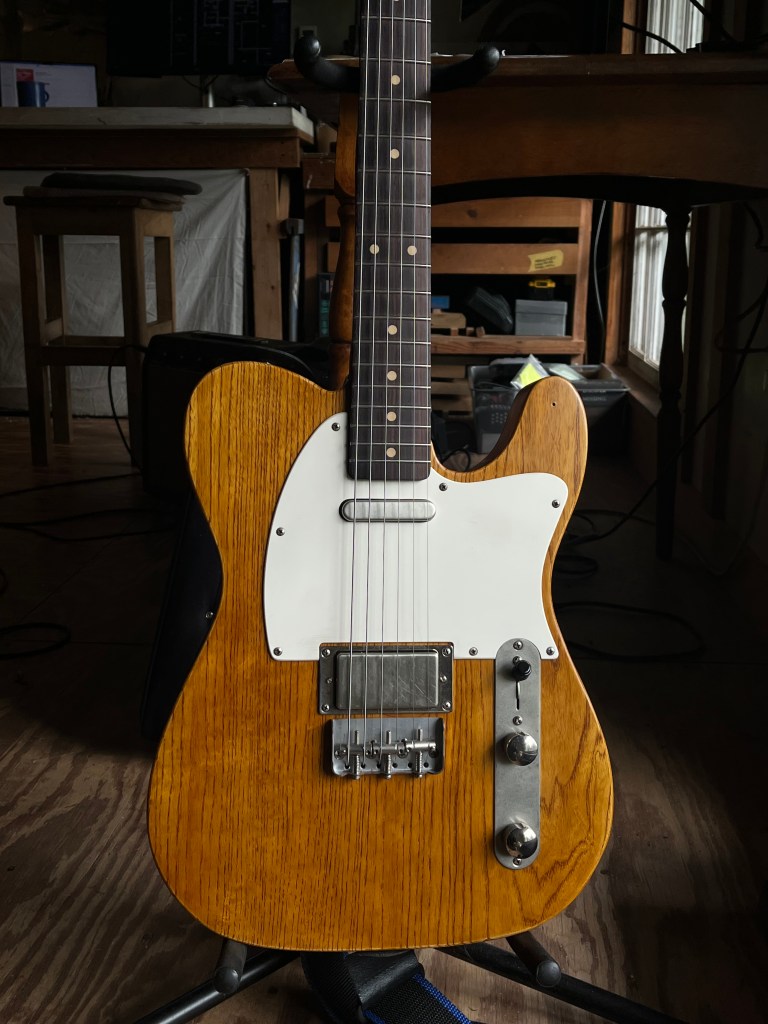
Pulling bits and pieces from a few favorite instruments, Nick and I each ended up with a Frankenstein in our own flavor. He put together an esquire-style jaguar: short-scale and fitted with the thickest neck profile available. It’s chunky, bite-y, and beautiful. For mine, the goal was to create a guitar whose punch could match its sweetness–where the warmer/ rounder neck pick-up would still be able to cut through with aggression, and conversely the bridge pickup wouldn’t have to sacrifice any heft to achieve its natural bite. All while feeling more akin to an acoustic instrument than a typical electric guitar: resonant, ergonomic, and alive. A lofty goal, but one that felt worth aiming for if we were going to go all the way down this road.
To get there, it meant a solid ash body, roasted rift-sawn maple neck (with as much mass as would still be comfortable to play), overwound pick-ups (+ unusual-for-a-tele 500K pots), steel saddles, and a super-thin hand-rubbed finish.
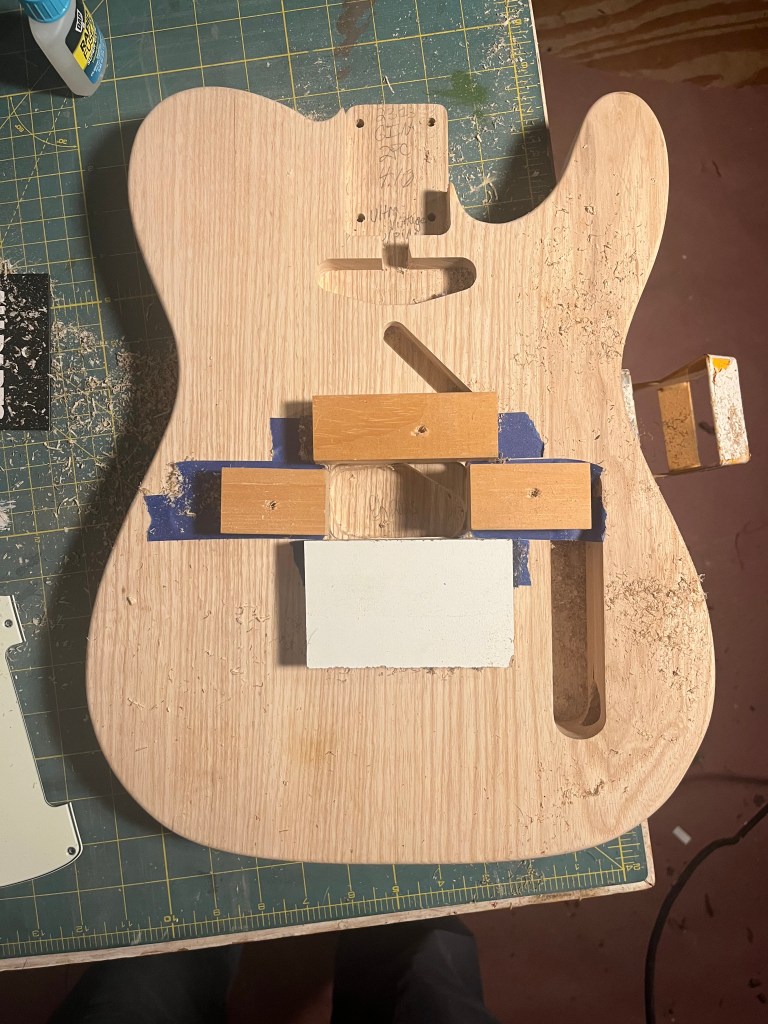
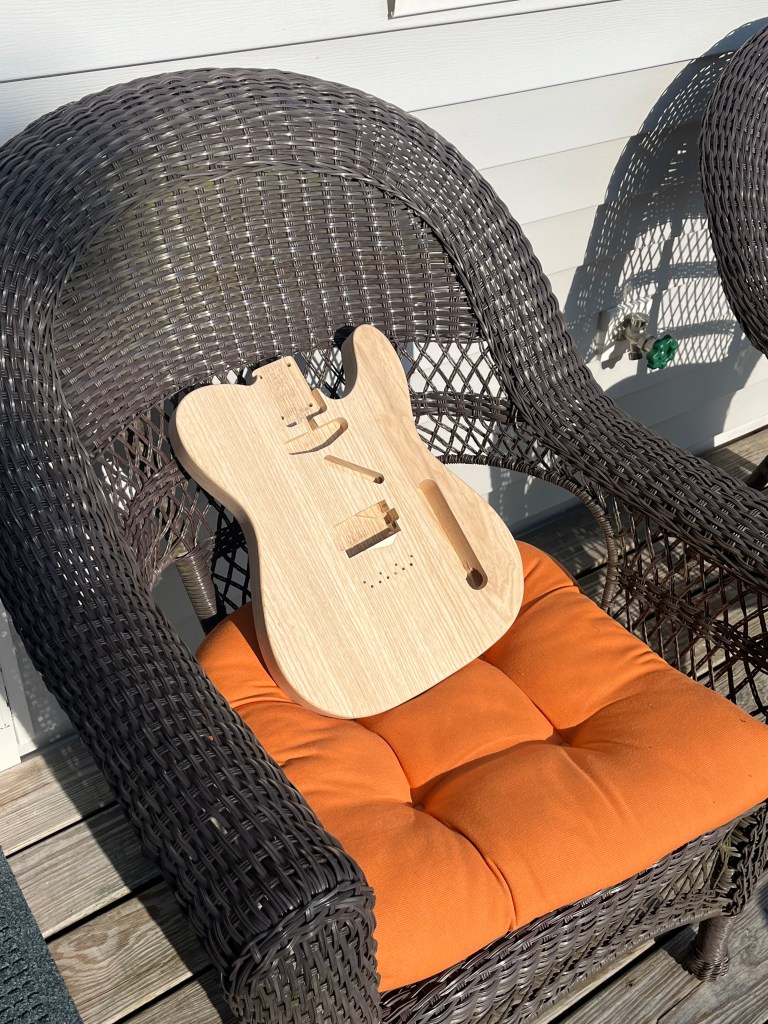
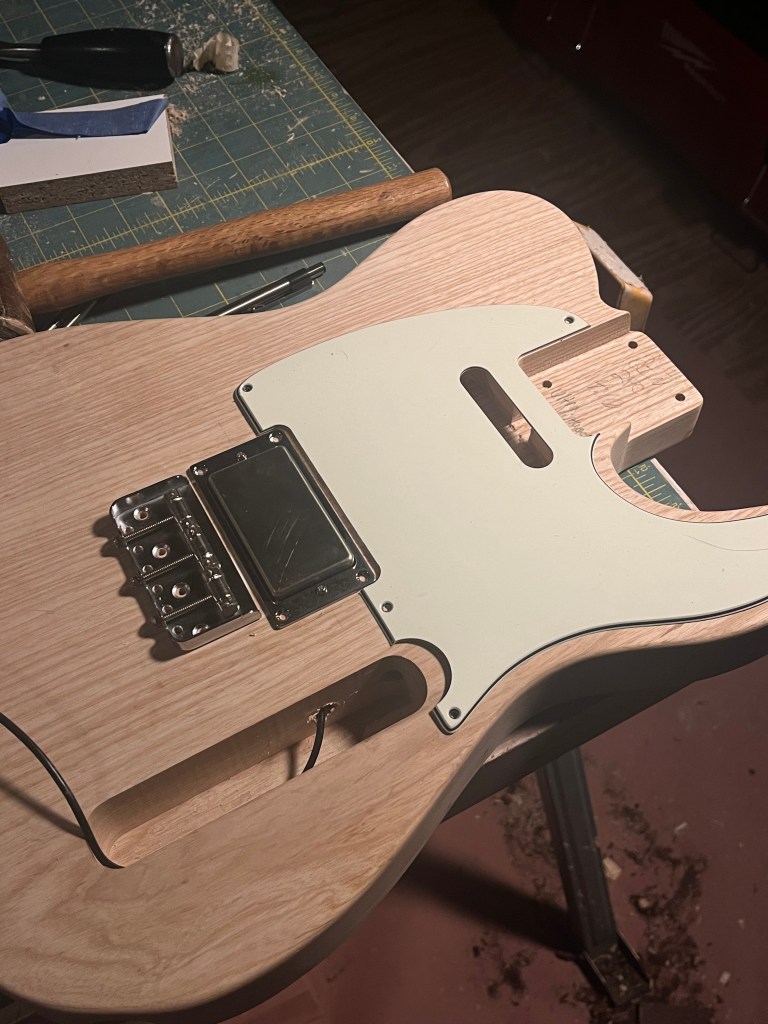
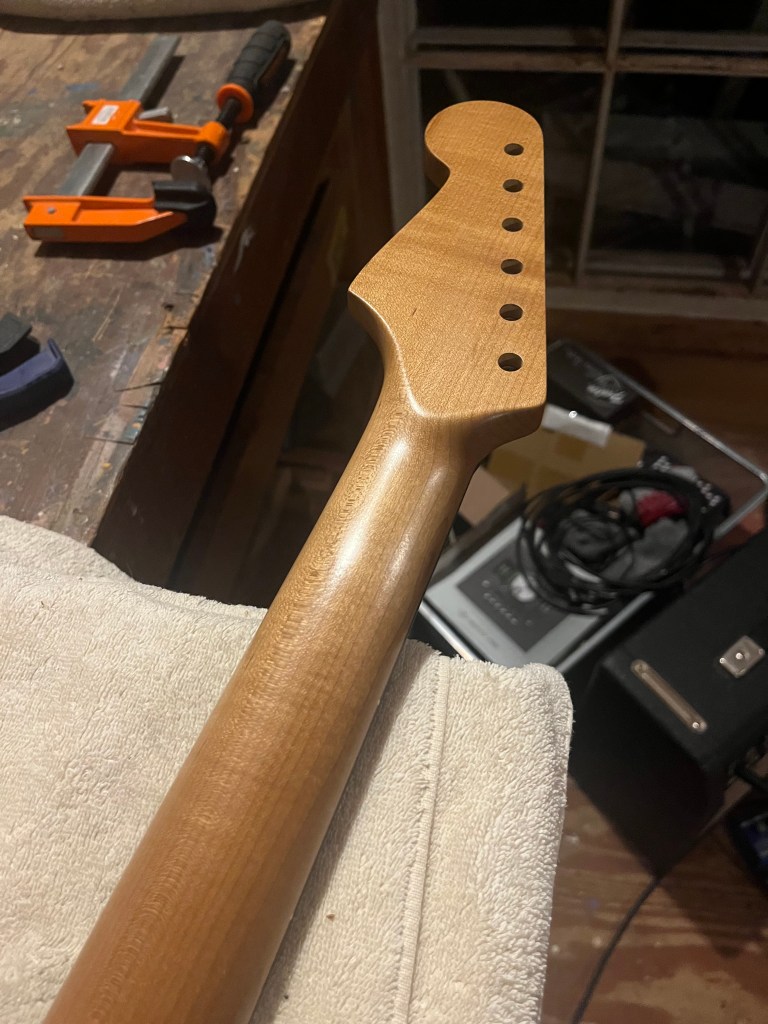

The ethic across the board was to try and keep things as low-tech (and low VOC) as possible, so Nick and I took a page out of the Windsor chairmaker’s book by using alternating layers of milk paint and shellac to achieve our desired finishes. I had long been intimidated by overwrought descriptions and boogeyman-esque stories of French polishing, but it turns out a pretty intuitive way to apply wood finish, once you understand how shellac behaves in general. Not having used it much before, dissolving de-waxed shellac flakes into strong alcohol quickly became a new favorite finish: it’s simple, super thin, easy to repair, dries quickly, and food-safe.
For a bit of extra juju, I found some genuine article pre-CBS neck screws to join the neck to the body–I figured if I couldn’t have the real thing, there might be some sneaky magic lurking in these little pieces of structural hardware from these old guitars…now that it’s done, the juju jury is still out, but every bit counts!
Finally, since my Frankenstein was falling in between so many middle-grounds of established standards, something wasn’t quite making sense to my eye after the standard telecaster pickguard went on. Pulling a few details from a telecaster deluxe pickguard design, I chopped the horn off a spare single-ply guard I had laying around–it’s not anything I’d been able to find precedent for, but I’m well-pleased with how this little detail turned out.


After chasing down so many variables, trying to do my best to hone every detail, finishing the instrument (exciting as it may be now that it’s done!) has only left me dreaming about all the other combinations possible. But, before then, I better put this newborn through its paces to see what kind of music it makes. It can be easy to conflate the means with the ends when it comes to tools and toys…after all, a guitar is meant to be played, not just doted on.


 softpaths.blog
Leave a comment