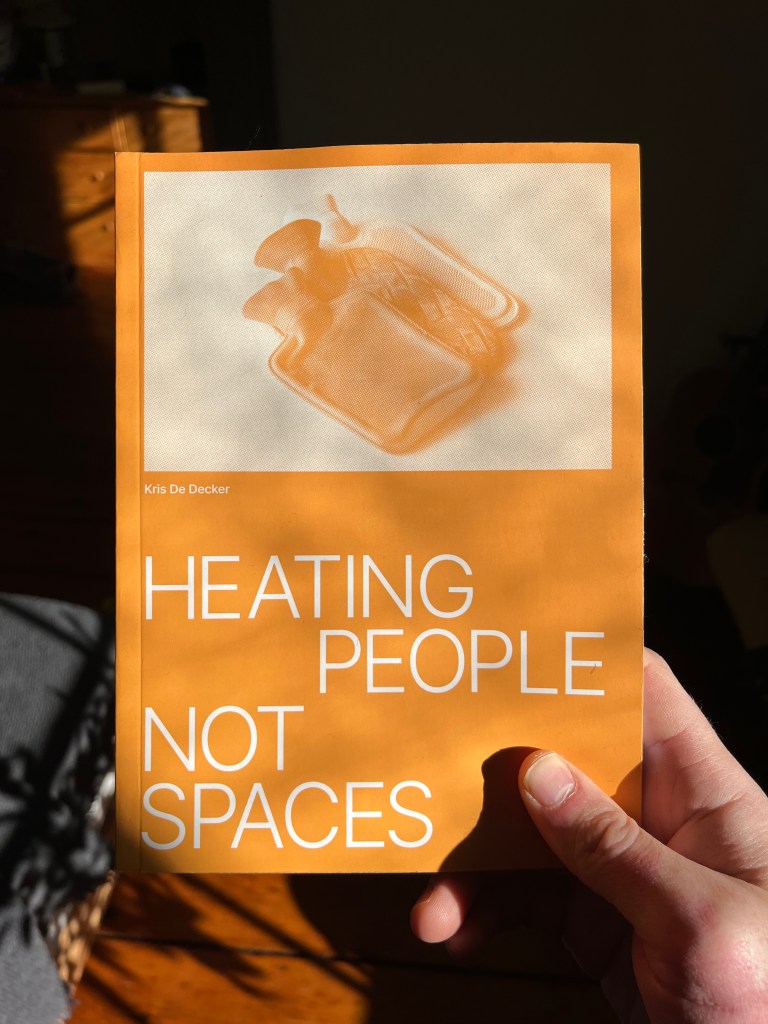
This little compilation is a brilliantly pragmatic and legible argument from LOW<TECH MAGAZINE‘s Kris De Decker that makes a sharp case for adapting historically proven solutions into our otherwise energy-gluttonous lifestyles. Encouragingly, De Decker exhibits that to address the reckless waste and associated problems of modern energy use, we already have the tools we need. In the innovation-infatuated culture we otherwise find ourselves in today, this train of thought increasingly relevant and wholly indispensable–almost regardless of subject.
As it relates to space heating (i.e. most of the operational energy use in buildings), the trick to significantly bringing down energy consumption doesn’t have to rely on expensive renovation projects or large heating system upgrades as we so often assume. It also doesn’t require any compromise in comfort or quality of life (in fact it could have quite the opposite affect). And it can be gleaned from the way people used to get cozy in the winters: by heating people, not spaces.
As De Decker lays out in the book, the way we primarily ensure comfort indoors in the winter these days (a perennially relentless and costly endeavor, however mundane it may seem!) is through convection: through heating up air and pushing it around to create an even and homogenous indoor climate. In large spaces, or in largely uninhabited spaces, you can imagine this is at best inefficient and–perhaps more importantly–extremely wasteful. Especially when we consider that this heat is often first produced by way of lighting some form of fossil fuel on fire. In the days of yore, however, when heat was as precious as it was tedious to generate and hard to capture, the intelligence emerged across cultures to do everything you could to focus the energy directly onto the person, rather than diffuse the heat into the space as a whole. This was done primarily through conduction and radiation and worked exceedingly well to ensure thermal comfort despite the very uncomfortable temperatures of the season–even in old sopping wet stone castles.
Importantly, De Decker is quick to caveat that despite the inherent soundness of this logic, the conduction and radiation technology our predecessors had isn’t necessarily to be envied or replicated. Fireplaces and wood burning stoves vary widely in their own efficiencies and create a great deal of indoor air pollutants; shoveling coal into your bedsheets to stay cozy through the night isn’t altogether the safest thing to do. Water, however, slowly emerged through the centuries as a dependable, safe, and broadly accessible thermal battery.
Enter the hot water bottle. In a way, this book in its entirety can be seen as somewhat of a love letter to the humble hot water bottle…it’s portable, it’s localized, and it’s effective. And, as it turns out, hot water bottles have yet to be studied to understand their use’s impact on space heating requirements and energy consumption. Shockingly, neither have clothes. While we have measures for the performance of both, these super cheap and universally available technologies don’t make an appearance in any of the conversations about keeping energy bills (and related emissions) low during heating seasons, despite their game-changing efficacy.
My aunt and uncle got me a hot water bottle for Christmas one year in my teens. I remember, as a teenager, wondering why I should have been grateful for such a strange and seemingly random gift…especially contrasted against a glut of so many plug-inable alternatives. Now, I sleep with that same hot water bottle at the foot of my bed, sit with it in my lap when I watch movies, and place it in the back of my chair while I work. In our drafty 200-year-old house, where the energy bills can dangerously soar well above $500/ month during the coldest months, that simple plastic pouch (and its growing number of siblings) have become indispensable. It can be 50 degrees Fahrenheit inside, but I’ll still be typing away snug as a bug as long as I have my hot water bottle. But, I now think, even if we lived in a much more “comfortable” house, the hot water bottle still wouldn’t leave my side as an unrivaled comfort companion.
 softpaths.blog
Leave a comment